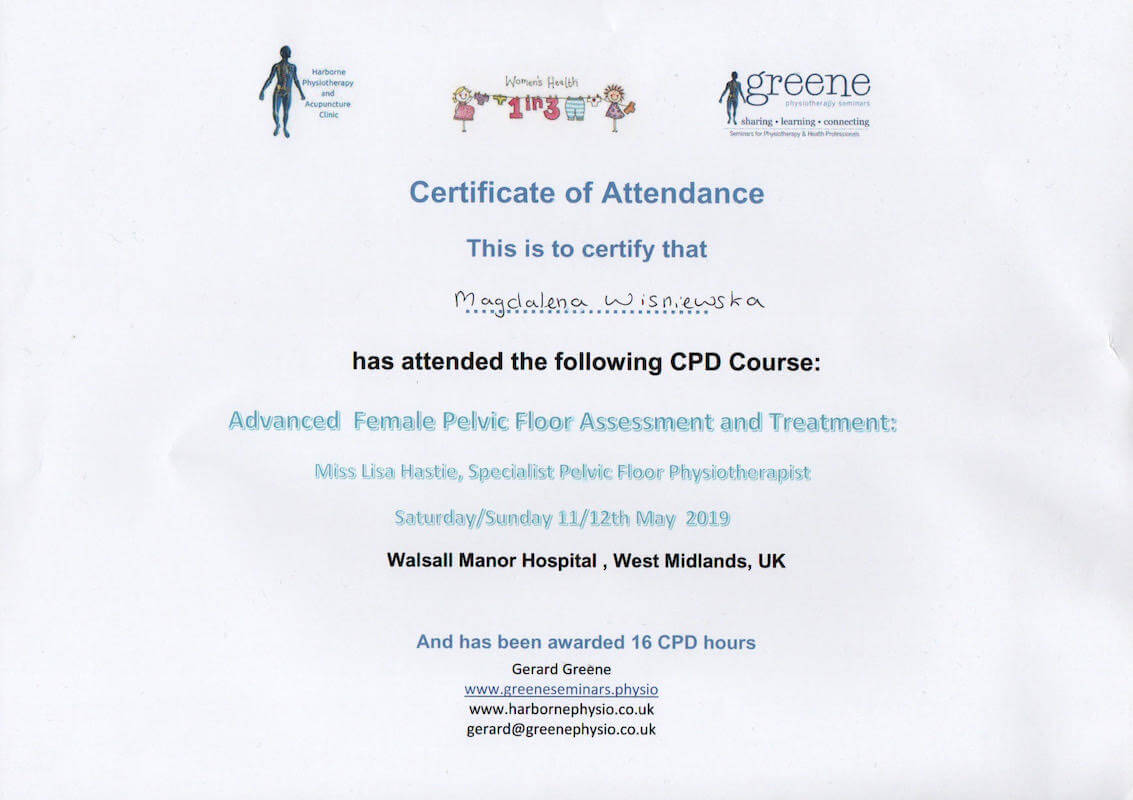
Magdalena is the founder of PelviCare and a Chartered Specialist Women’s Health Physiotherapist with nearly two decades of experience across both private and hospital settings.
She holds a Master’s degree in Physiotherapy (2011) and is registered with the Health and Care Professions Council (HCPC) and the Chartered Society of Physiotherapy (CSP). She is also a proud member of the Pelvic, Obstetric and Gynaecological Physiotherapy (POGP) professional network and a certified Mummy MOT® practitioner.
Throughout her career, Magdalena has worked across multiple areas of physiotherapy, including orthopaedics, neurology, and sports injury, allowing her to bring a well-rounded and comprehensive approach to her current practice.
Her passion for Women’s Health Physiotherapy led her to establish PelviCare in 2019, a clinic dedicated to supporting women at every stage of life. A clinic that effectively assesses and treats musculoskeletal and pelvic dysfunctions.
Her areas of expertise include:
-
Pelvic pain (IC, PGP, SPD, painful intercourse)
-
Endometriosis
-
Pelvic floor dysfunction (including bowel and bladder issues)
-
Prolapse (including pessary fitting)
-
Diastasis recti
-
Breastfeeding challenges (such as blocked ducts and mastitis)
Magdalena is deeply committed to evidence-based practice and regularly attends professional development courses and conferences to ensure she continues to offer the highest standard of care. Her treatment philosophy is rooted in a whole-body approach—treating the person, not just the symptoms—and empowering each patient with knowledge, confidence, and lasting results.
Karolina– Specialist Women’s Health Physiotherapist
Karolina is a highly experienced physiotherapist, registered with the Health and Care Professions Council (HCPC) and a proud member of both the Chartered Society of Physiotherapy (CSP) and the Pelvic, Obstetric and Gynaecological Physiotherapy Association (POGP).
Since graduating in 2007, Karolina has worked across outpatient clinics and private practice, building a strong clinical foundation. She is currently expanding her expertise by studying Osteopathic Medicine, further deepening her understanding of the body and enhancing her manual therapy skills.
Karolina has developed a special interest in Women’s Health Physiotherapy, with a focus on:
-
Pregnancy and postnatal pelvic floor rehabilitation
-
Pelvic pain and coccyx pain
-
Post-surgical recovery after procedures like hysterectomy or endometriosis surgery
Her approach is holistic and individualised, aiming to uncover and treat the root cause of each condition. Karolina combines accurate assessment with a range of effective treatment techniques, including:
-
Manual therapy
-
Soft tissue and visceral techniques
-
Tailored exercise programmes
She is passionate about helping women restore function, reduce pain, and regain confidence in their bodies at every stage of life.


Indre– Sports, Pregnancy & Postnatal Massage Therapist | Nutritional Therapist
Indre is an experienced Level 5 Sports & Remedial Massage Therapist with specialist Pregnancy and Postnatal Massage training through Well Mother, and she is a proud member of the Massage Training Institute (MTI). She also holds a Level 6 Diploma in Nutritional Therapy and is a member of the Association of Naturopathic Practitioners (ANP).
Indre blends evidence-informed remedial techniques with a calm, intuitive approach—often described as deep yet pain-free. Each session is tailored to the individual, helping to reduce tension, improve mobility, and support recovery while promoting relaxation and balance.
With a strong interest in women's health, Indre supports clients through pregnancy, birth preparation, and postnatal recovery. Where helpful, she can also integrate practical nutrition and lifestyle guidance to support overall wellbeing.
Her areas of focus include:
- Pelvic, hip and lower back tension, including pregnancy and postnatal discomfort
- Chronic pain and recurring muscular tightness
- Chronic fatigue and stress-related burnout
- Fibromyalgia, with careful pacing and a comfort-first approach
- Post-injury and post-training recovery / injury prevention (overuse, DOMS, return to activity)
Certificates